Product Groups
Search Our Site


Promo

Current Promotions

Click Here for our latest specials.


    Blog
DCD Blog


Adobe Reader & Flash Downloads
Adobe IconClick Here for Adobe Reader Download.

Click Here for free Flash Player.
Quality By Design

DCD Design & Manufacturing Ltd.
#180 - 6620 McMillan Way
Richmond, BC
Canada V6W 1J7

Tel: 604-232-4445
Toll Free: 1-888-794-8357
(US & Canada)

Duct Rodders - Fish Tapes

Home > Duct Rodders

51000- 1/8" Diameter Rod


Series 51000
Fish Rod
1/8" Diameter Rod


Reel Rod


Series 52000
Reel Rod
3/16" Diameter Rod


Tuf Rod

Series 52500
Tuf Rod
1/4" Diameter Rod


Ruf Rod


Series 53500
Ruf Rod
5/16" Diameter Rod


Ruf Rod


Series 54000
Ruf Rod
3/8" Diameter Rod


Ruf Rod


Series 56000
Ruf Rod
7/16" Diameter Rod


Ruf Rod

Series 56500
Ruf Rod
1/2" Diameter Rod


Accessories

Duct Rodder Accessories
 
Detectable Duct Rod


Detectable Rodders

Detectable Ruf Rod

Series 53700
Detectable Ruf Rod
5/16" Diameter Rod


Detectable Ruf Rod

Series 56200
Detectable Ruf Rod
7/16" Diameter Rod
 

General Duct Rodder Information and Selection

 
Series 57500
Hand Rodder
& Accessories

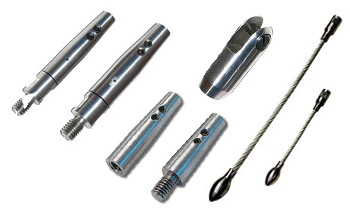
Hand Rodder Accessories


Grapple and Brush


Duct Rodders: The Duct Rod

The rod is manufactured from state of the art materials formulated to offer the high performance and durability demanded by our customers.

The core of the rod is manufactured by the Pultrusion process. This involves impregnating high strength continuous glass fiber filaments with a liquefied resin. The fibers are drawn into a heated die where the resin matrix is cured, bonding the fibers together and allowing mechanical load to be transmitted through the matrix and distributed amongst the fibers.

The resulting pultruded rod combines both the high stiffness required to push the rod through long distances of ducting, with the flexibility to handle tight bends without damage. This inner core is then coated with a highly durable, scratch resistant Polypropylene sheath which protects the core from mechanical damage.


The Frames

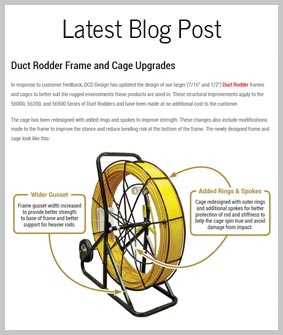
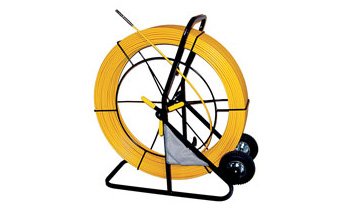
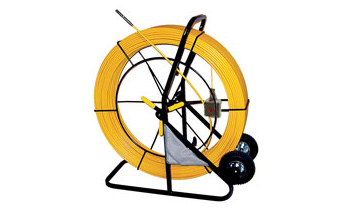
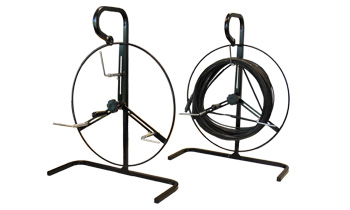
The Frames are also a feature of the DCD systems. The four largest sizes incorporate the new EZ-Tip™ feature; a larger footprint for stability; steel brake handles that will last forever; dual rod out-feeding positions and wheels inside the frame width. The two smallest sizes feature new frames with the feedout built into the handle. All frames can be laid down on either side. These are just some of the new design features that will make every unit more usable and friendly for the end user.

Duct Rods - Selection

Which is the right rod diameter for any given application? The rod selection is usually governed by several factors including:

· The size of ducting it is to be pushed through

· The distance the rod is to be pushed

· The number and tightness of bends in the ducting

· If the ducting is already occupied by cable

When being pushed through the duct, any rod will tend to form “sine waves”, hitting the wall of the duct at certain intervals. Each time the rod comes in contact with the wall of the duct, it causes friction. The friction will build and eventually prevent the rod from being pushed any further. Small rod in large duct will make more frequent contact with the ducting; the same rod in smaller duct will make less frequent contact and therefore less friction so it can be pushed further. Large rod in small ducting is a good situation, but reduced flexibility of the rod may cause increased friction in the tighter bends.


NOTE: These Duct Rodders are custom Built to order and are non-returnable except for warranty. Exercise caution when ordering.

Extreme care should be taken when unpackaging replacement rod because the fiberglass rod stores considerable energy and may cause severe injury.


What are Fish Tapes?

A Fish Tape, also known as a draw wire or draw tape, is a tool used by electricians to route new wiring through walls and electrical conduit. Made of a narrow band of spring steel, by careful manipulation, the tape can be "fished" (guided) through the confined spaces within wall cava ties. Once guided through, the new wiring can be pulled into the wall by attaching it to teh end of the fish tape and pulling the tape back whence it came.


Tradeshows | Manufacturer's Representatives | Site Map | Resources | Contact